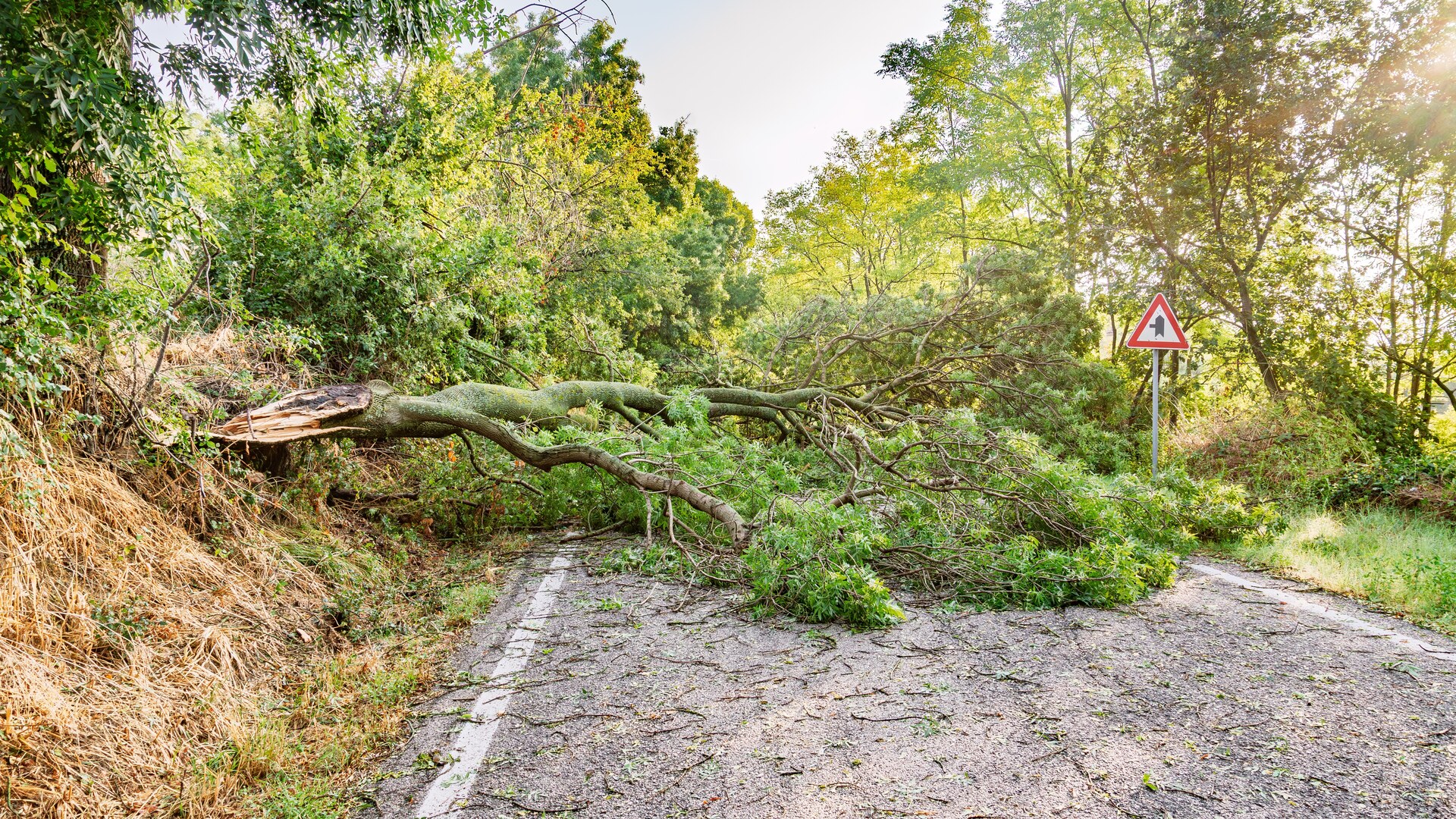
After the wind drops, the damage isn't only what's on the ground. We clear what fell and assess what didn't.
Property owners deal with the obvious damage — the tree across the driveway, the branch through the shed. What gets missed is the cracked union forty feet up, the hanger resting in a crotch, and the tree whose root plate shifted just enough to lose its anchorage. Those come down in the next system, three weeks later, and the second claim is always worse than the first because it was foreseeable.
Storm cleanup done properly is two jobs: clear the debris, and assess everything still standing.
Downed trees, snapped leaders, brush fields and scattered wood, cut up, chipped and removed. Access routes cleared first so other trades can get to work.
Broken limbs lodged in canopies, taken down under control from the tree or by aerial lift. This is the most-skipped item after a storm and the one most likely to injure someone.
A canopy-level look at every significant tree on the property: torn unions, cracked stems, lifted root plates, stripped bark, and one-sided crown loss that leaves a tree unbalanced going into the next event.
Clean cuts back to appropriate points on trees that lost limbs — because torn stubs and ragged tear-outs invite decay and shorten what's left of the tree's life.
Sometimes the answer is that the tree is finished. We'll say so, with photographs and reasoning.
Rutting from equipment, crushed beds, torn sod, damaged interlock and fencing — repaired by our own crews.
Landscape restoration →
After a major event we work through properties by triage rather than by call order: structures and life-safety hazards first, blocked access second, then cosmetic and cleanup. If you're a restoration contractor or property manager with several sites hit in the same system, send the list — we'll sequence it and report back per address rather than making you chase updates.
Each property gets its own photo set and its own scope. Bulk work does not mean bulk documentation.
Storm claims get scrutinized, because volume invites scrutiny. Ours are built to withstand it:
That last one protects everybody. If we flag a compromised tree and the owner declines removal, that's documented — and it matters if the tree comes down later.
Maybe. What matters is whether the remaining unions are sound, whether the crown is balanced, and whether the root plate moved. None of that is visible from the ground.
Coverage varies by policy and by what was damaged. Broadly, removal is more often covered when a tree hits an insured structure than when it lands harmlessly on the lawn — but that's a question for the adjuster, not for us. We provide the scope and documentation; the carrier determines coverage.
Emergency calls first — trees on structures, vehicles and access routes. General cleanup follows as crews clear. Getting on the list early matters.
Yes, with per-address scopes, per-address photo sets, and consolidated invoicing if that's easier for your file.
We'll get you a documented, itemized scope for the entire exterior — trees, hardscape and landscape on one file. Scoping and photo documentation are no charge.