Fallen trees. Immediate action. 24/7 emergency dispatch. 24/7 emergency dispatch: (437) 567-2199
Green Care Earth
☎ (437) 567-2199
Home Tree Services Emergency tree removal Dangerous tree removal Storm-damaged tree cleanup Exterior Restoration Interlock removal & replacement Retaining wall repair Deck repair & reconstruction Concrete driveways & walkways Landscape Restoration Sod replacement Grading & drainage Post-construction restoration Insurance & Emergency Work Storm & wind damage Fallen tree property damage Emergency site cleanup About Us Gallery Blog FAQ Contact Us
Landscape Restoration · Sod

Sod Replacement and Lawn Restoration

New sod on unprepared ground dies by August. We fix the soil first — that's the whole job.

Request a sod scope Call (437) 567-2199

Sod doesn't fail. Soil does.

Sod arrives with roughly an inch of soil and about ten days of stored energy. In that window it either sends roots down into the ground beneath it, or it doesn't. If it doesn't, it survives on irrigation until the first hot stretch and then goes off in patches — usually right where the equipment tracked.

Sod fails when it's laid over compacted subsoil, over buried construction debris, over a grade that ponds, or too high against a walkway so the edge dries out. All four are preparation failures, and all four are avoidable in the half-day before the first roll goes down.

Where we're called in

After equipment access

Cranes, bucket trucks, excavators and skid steers compact soil severely, often to a depth of a foot or more. Ruts are the visible damage; compaction is the damage that kills sod.

After excavation

Service trenches, foundation work, drainage installation and waterproofing leave backfill that settles for years and topsoil that's been mixed with subsoil spoil.

After tree removal

Stump grinding leaves a spoil pile of wood chips and soil. Chips backfilled into a hole and sodded over will decompose, settle, and rob nitrogen from the turf above. That material comes out. Stump grinding →

After storm and emergency work

Debris impact, chemical spill, and access damage during response. Emergency site cleanup →

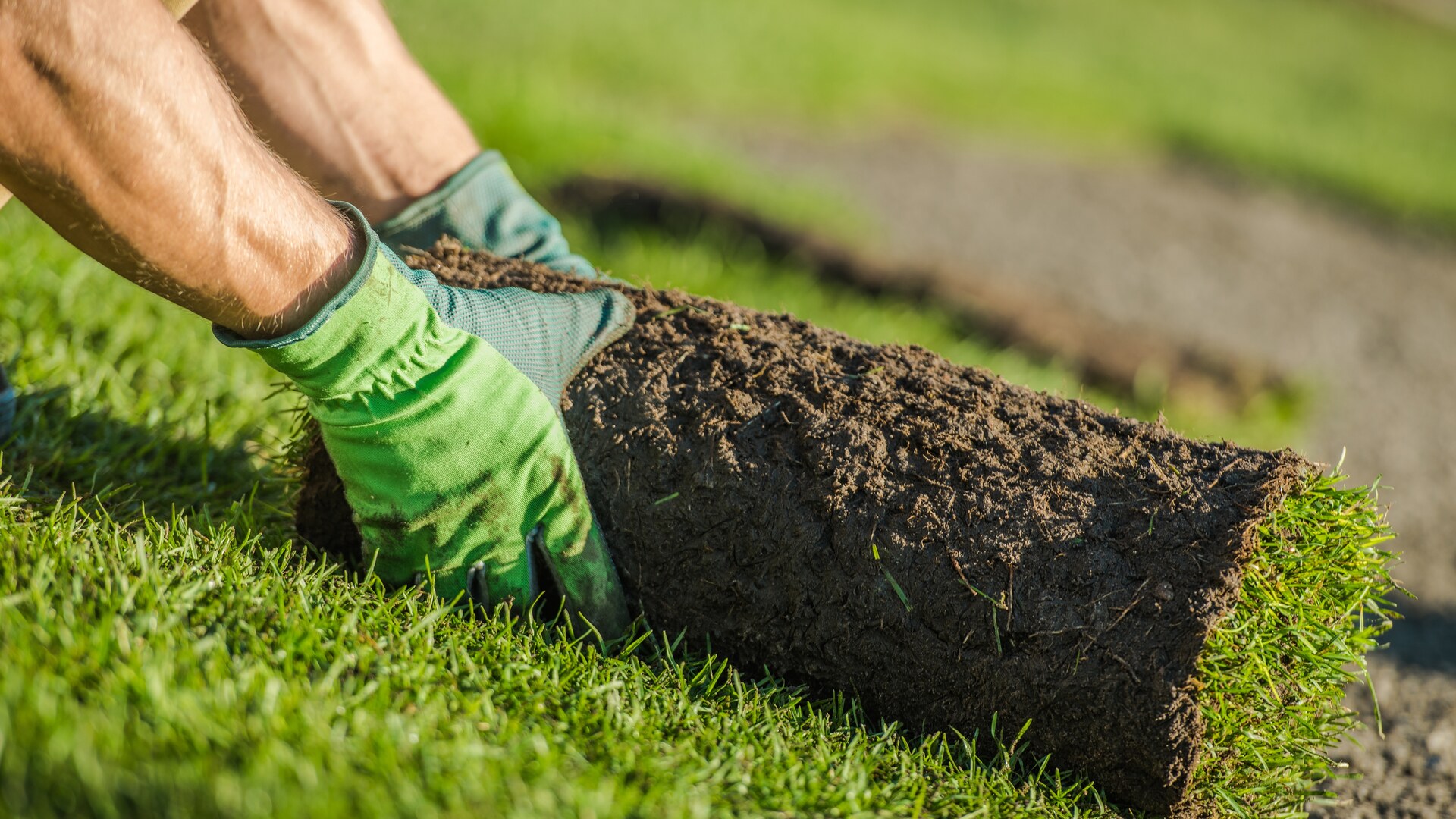
Fresh sod roll being pressed into prepared soil

Our process

Strip the failed turf

Dead sod, weed cover and damaged turf removed and hauled — not tilled in, where it forms a layer of decomposing thatch under the new lawn.

Relieve compaction

Deep tillage or subsoiling to break the compacted layer so roots and water can move through. This is the step that separates lawn restoration from lawn decoration, and it's the one that gets skipped.

Remove debris

Construction rubble, concrete washout, wood chips, buried offcuts. If it's under the topsoil it will surface eventually.

Import and place topsoil

Screened topsoil to a specified depth — enough to support root development, not a cosmetic skim.

Establish grade

Positive slope away from foundations, no low spots that hold water, finished level set so sod sits flush with adjacent walkways rather than proud of them or below them.

Fine grade and firm

Raked to a consistent surface and lightly firmed so there are no soft spots to settle into footprints.

Lay sod

Fresh sod, laid within a day of harvest where possible, staggered joints, tight seams, cut clean to bed and hardscape edges, rolled to ensure soil contact.

Water in and hand over

Thorough initial watering and clear written watering instructions — because from that point the outcome depends on whoever's holding the hose.

Scoping and documentation

Itemized by square metre, topsoil depth and volume, tillage area, debris removal, disposal of stripped material, and sod type. Photographed before, during preparation, and on completion.

The pre-condition photos matter most. Restoration scopes get challenged with "the lawn was already in poor shape," and without a dated photograph that's an argument nobody can win. We take them before equipment moves onto a site — including on jobs where landscape restoration isn't yet part of the scope.

Common questions

Sod or seed?

Sod for immediate coverage, erosion control on slopes, and anywhere the property needs to look finished — which is most claims work. Seed costs less and establishes a deeper root system over time, but needs weeks of consistent moisture and is realistic mainly in spring and early fall.

How long until it's usable?

Light foot traffic after roughly two weeks. Full use after about a month, once it's rooted in. First mow when it's anchored enough not to lift.

How much watering does it need?

Daily and heavily for the first two weeks, then tapering. Under-watering in the first fortnight is the single most common cause of failure and it isn't recoverable.

Will it match the existing lawn?

Sod is typically a blend of Kentucky bluegrass varieties and won't be identical to an established lawn of mixed species. It blends within a season or two.

Can you sod in summer?

Yes, with committed watering. Heat isn't the problem; drying out is.

Related: Grading & drainage · Post-construction restoration · Landscape restoration

Send us the loss address

We'll get you a documented, itemized scope for the entire exterior — trees, hardscape and landscape on one file. Scoping and photo documentation are no charge.

Send loss details 24/7 dispatch: (437) 567-2199