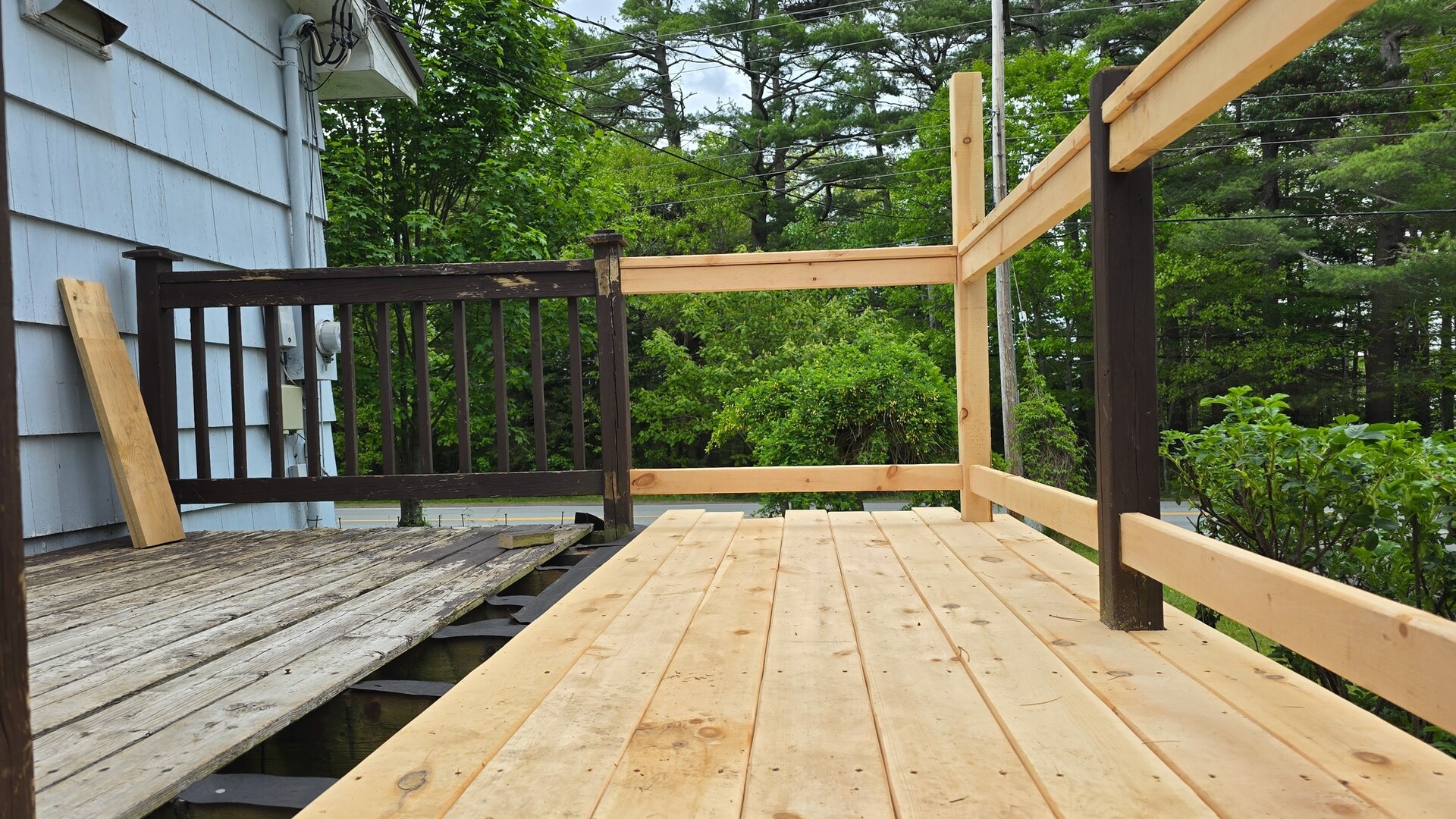
From structural repairs to full rebuilds — with the framing, connections and guards brought to current code.
A tree comes down on a deck and takes out three boards. The obvious repair is three boards. But the impact also drove the framing down onto the posts, split a joist that isn't visible from above, and loosened the ledger connection where the deck attaches to the house — which is the connection that, when it fails, drops the whole structure with people on it.
Deck failures are almost always connection failures, and connections are what impact damages. We open up and assess before we price, because a scope built on what's visible from the surface is a scope that generates a supplement.
Tree and limb strike, vehicle contact, falling debris. Full structural assessment of framing, ledger, posts and footings — not just the decking. Fallen tree damage →
Post bases sitting in soil or on grade, joist ends against a ledger with no flashing, and cut ends never sealed. We replace the affected members and correct the detail that caused it.
Improperly fastened, unflashed, or attached to compromised rim board. The most common serious deficiency we find and the most consequential.
Footings above frost depth, undersized, or heaved. Requires jacking, temporary support and replacement from the ground up.
Height, opening spacing and load resistance below current code. Common on older decks and a direct injury exposure.
Re-decking sound framing in wood or composite, including hidden fastener systems and picture-frame borders — through to full reconstruction where repair isn't economical or the original was built substantially outside code.

Where damage is suspected below the surface, boards come off. Assessment from the ground with a flashlight isn't assessment.
Post bases, joist ends, ledger, and any member in contact with grade or holding moisture. Sound wood on the surface can be gone underneath.
Ledger fastening and flashing, joist hangers, post-to-beam connections, and guard attachment. Original construction often used fasteners that are no longer accepted.
Depth, size and bearing. If frost has moved them once, it will again.
Photographs of every deficiency with an explanation of what it means. Where damage relates to a covered event, we distinguish clearly between impact damage and pre-existing deterioration — that distinction is the adjuster's whole question, and pretending everything is storm damage helps nobody.
Decks above a certain height, and any deck attached to a dwelling, generally require a building permit. Rebuilding to the original configuration doesn't exempt the work if the original didn't comply.
We identify permit requirements at assessment, prepare what's needed for the application, and build to current code for guard height, opening spacing, stair geometry, connections and footing depth. Where the original deck was non-compliant, we'll tell you what compliance requires and what it costs — before demolition, not after an inspector's visit.
If the rest of the structure is sound, yes. We'll assess and tell you honestly. Sometimes a repair costs nearly as much as a rebuild once access and matching are priced in.
Wood weathers, so new boards will differ initially and blend over time. Composite lines change; if the original product is discontinued we'll show you the closest match and discuss whether a full re-deck is the better result.
It depends on the scope of work and the municipality. Guards and stairs are the usual triggers. We'll confirm with the local building department rather than guess.
Yes — sod, beds, planting and grading disturbed by the work are ours. Landscape restoration →
We'll get you a documented, itemized scope for the entire exterior — trees, hardscape and landscape on one file. Scoping and photo documentation are no charge.