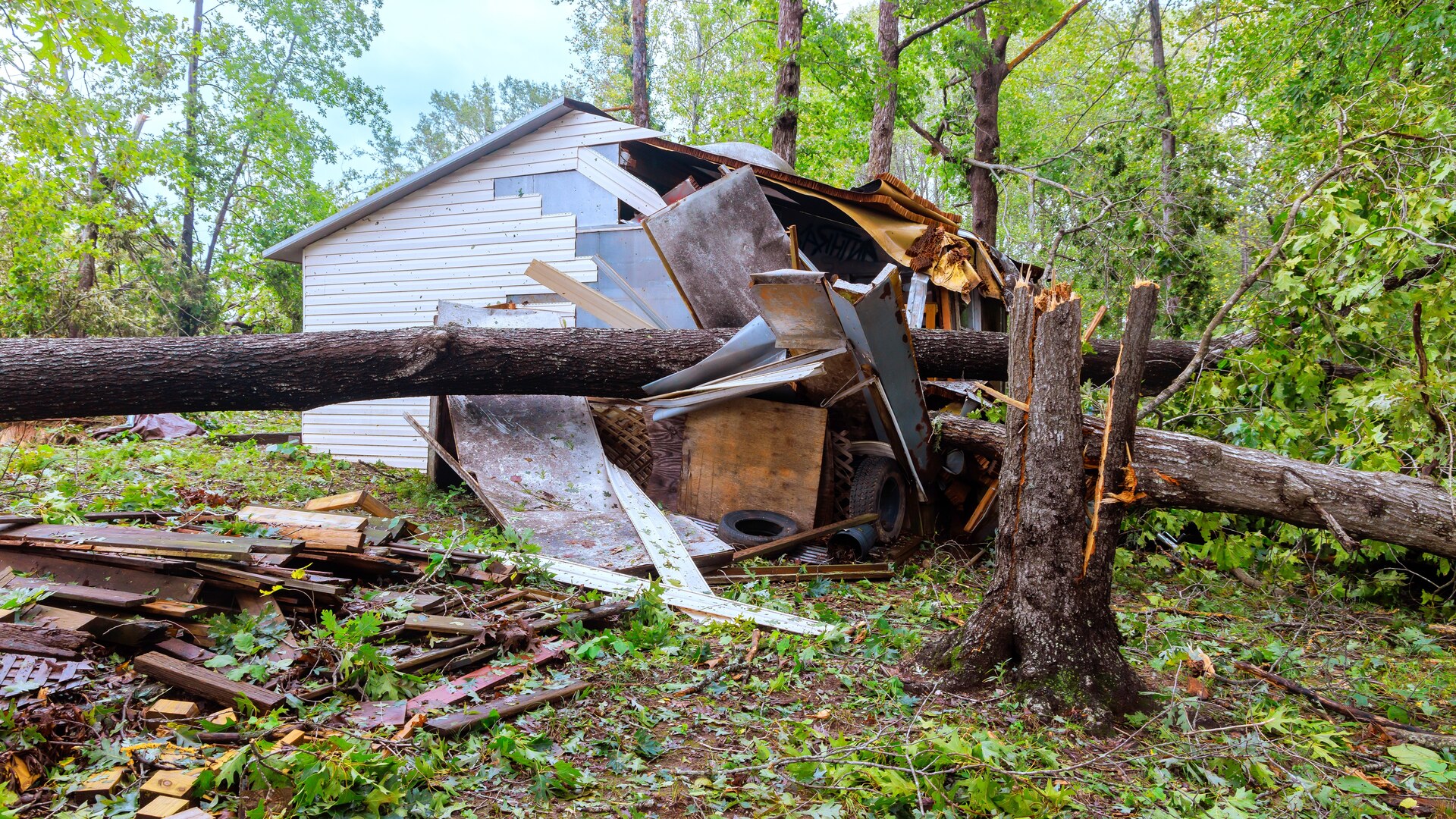
Removal, documentation and rebuild — including the fence, deck and hardscape it landed on.
A tree resting on a structure is holding tension. Cut sequence determines whether the remaining weight is released under control or dropped through the ceiling.
Once the tree is in rounds, the evidence is gone. We photograph the failure point, root plate, decay if present, damage path, and every affected component before a saw starts.
Where the cause is likely to be questioned — a healthy-looking tree in moderate wind, a boundary tree, a tree previously flagged as hazardous — we retain the failure section and root plate rather than chipping them.
Rigged down in sections, or crane-picked where the load over the structure demands it. Dangerous tree removal →
Tarping roof punctures, boarding broken glazing, fencing unsafe areas. Stops the loss growing while the scope is being settled.
Full debris removal so the roofing and structural trades can start.
Whatever the tree landed on is generally our scope too:
Roofing, siding, windows and interior restoration stay with those trades. We coordinate the handoff and keep the scope boundary explicit so nothing is billed twice or missed entirely.
Adjusters ask a consistent set of questions after a tree failure, and the physical evidence usually answers them.
A cross-section shows decay extent, cavity size and how much sound holding wood remained. A tree with a hollow butt and a thin shell that failed in moderate wind is a different conversation from a sound stem that snapped under an ice load.
Fungal conks, cavity openings, included bark at a union, soil heaving at the root plate — visible from the ground or not, and photographable either way.
Root plate, butt, mid-stem or union. Each points to a different cause.
Documented pre-loss condition, prior maintenance and any previous hazard assessment. Tree health assessments →
We report what we find. We don't shade an assessment toward the outcome the person paying for it would prefer — which is precisely why the assessment is worth having.
Liability generally depends on whether the owner knew or should have known the tree was hazardous — which is a legal question, not ours. Our contribution is the physical evidence: condition, defect visibility and failure mode, documented properly.
Take steps to prevent further damage, but don't destroy the scene. We document thoroughly before cutting so the record survives even when the tree doesn't.
No — we handle the tree, temporary protection and everything outside the building envelope. Roofing goes to the roofing trade, and we coordinate.
Emergency removal and make-safe within a day. Reconstruction depends on scope approval, materials and permits, and we'll give you a realistic schedule rather than an optimistic one.
We'll get you a documented, itemized scope for the entire exterior — trees, hardscape and landscape on one file. Scoping and photo documentation are no charge.