Fallen trees. Immediate action. 24/7 emergency dispatch. 24/7 emergency dispatch: (437) 567-2199

Green Care Earth
☎ (437) 567-2199
Home Tree Services Emergency tree removal Dangerous tree removal Storm-damaged tree cleanup Exterior Restoration Interlock removal & replacement Retaining wall repair Deck repair & reconstruction Concrete driveways & walkways Landscape Restoration Sod replacement Grading & drainage Post-construction restoration Insurance & Emergency Work Storm & wind damage Fallen tree property damage Emergency site cleanup About Us Gallery Blog FAQ Contact Us
Exterior Restoration · Concrete

Concrete Driveways, Walkways and Pads

Flatwork replaced with the base preparation, reinforcement and jointing that determines whether it cracks in year two or year twenty.

Request a concrete scope Call (437) 567-2199

Concrete cracks. Where it cracks is a choice.

All concrete moves and all concrete cracks. Good flatwork controls where by putting joints at the right spacing and depth so movement happens along a straight line nobody notices. Bad flatwork skips the joints, skims the base, and cracks randomly across the middle within a couple of winters.

Add our climate — freeze-thaw cycling, road salt, plow blades — and the margin for error narrows further. Concrete placed on frozen ground, finished while bleed water is still on the surface, or placed without air entrainment will spall, no matter how good it looks on day one.

We do the unglamorous parts properly, because on this side of the trade they're the entire job.

What we place

Driveways

Full replacement including excavation, granular base, reinforcement, jointing, apron and curb-cut coordination with the municipality where required. Graded to drain away from the garage and the foundation.

Walkways

Front walks, side paths and service walks. Consistent width, proper cross-slope, broom finish for traction, and joints matched to the run.

Pads

Shed, generator, HVAC, hot tub, garbage enclosure and equipment pads — sized and reinforced to the actual load, formed square, sloped to drain. Where a pad is replaced under an existing unit we coordinate the disconnect and reset with the relevant trade.

Steps & landings

Consistent rise and run, footings below frost depth, and drainage away from the entry. Uneven risers are a trip hazard and a liability exposure; we correct geometry rather than replicate it.

Curbs and mow strips

Edge definition and restraint, including plow-damaged and vehicle-damaged sections.

Repairs and section replacement

Where a single panel is damaged and the rest is sound, we saw-cut, remove and replace to the joint lines so the repair follows the existing pattern.

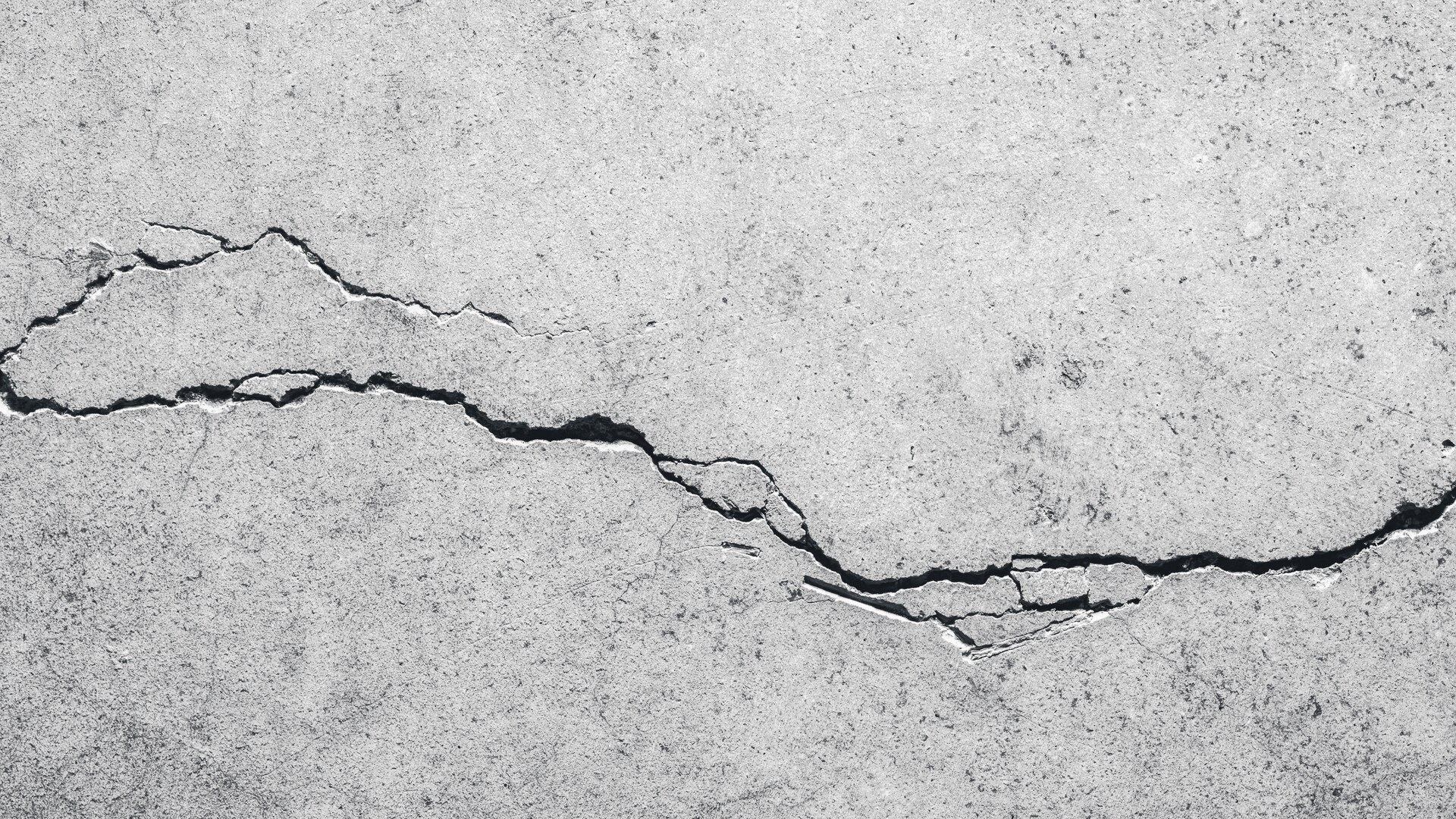
Cracked concrete slab showing a failure running across the surface

Our process

Remove and dispose

Existing concrete broken out and hauled off, including any reinforcement.

Prepare the base

Excavate to competent subgrade, place and compact granular base to depth in lifts. Depth follows use — a walkway and a driveway that parks a truck are different builds.

Grade for drainage

Slope established away from structures before anything is formed. Retrofitting drainage after the fact isn't possible.

Form and reinforce

Formed to line and grade, with rebar or mesh appropriate to the application, supported at the correct height rather than laid on the ground and pulled up during the pour.

Place and finish

Specified mix with air entrainment for freeze-thaw durability. Finished at the right point in the set, with a broom texture for traction.

Joint and cure

Control joints cut at correct spacing and depth, isolation joints against structures, and proper curing — the step most often shortened and the one that governs long-term surface durability.

Insurance and restoration work

Concrete shows up on claims through vehicle impact, tree failure, excavation for water or foundation work, and settlement from undermining or washout. Insurance & emergency restoration →

The scoping issue is almost always extent. Concrete damage propagates — a vehicle strike fractures well beyond the impact point, and a section undermined by water has lost bearing across an area larger than the visible crack. We photograph the base condition on removal, which is what demonstrates why the replacement area is the size it is.

Scopes are itemized by square footage, thickness, base depth, reinforcement type, joint linear footage and finish. Reviewable, comparable, and defensible.

Common questions

How soon can I drive on it?

Foot traffic typically after a few days, vehicles considerably longer, depending on mix and temperature. We'll give you specific timing for your pour and it isn't a number worth rushing.

Can you match my existing concrete?

New concrete is always lighter than weathered concrete and darkens over the first year. Texture and jointing can be matched closely; exact colour cannot. For a partial replacement we'll be clear about what to expect.

Concrete or interlock?

Concrete costs less up front and has fewer joints. Interlock is repairable in sections, tolerates settlement better, and can be lifted for access to services underneath. For claims work, repairability is often the deciding factor. Interlock replacement →

Do you pour in winter?

With appropriate precautions and mix design, within limits. Below a certain point it isn't worth the risk to the finished product, and we'll say so rather than pour something that spalls in spring.

Related: Interlock replacement · · Sod replacement

Send us the loss address

We'll get you a documented, itemized scope for the entire exterior — trees, hardscape and landscape on one file. Scoping and photo documentation are no charge.

Send loss details 24/7 dispatch: (437) 567-2199