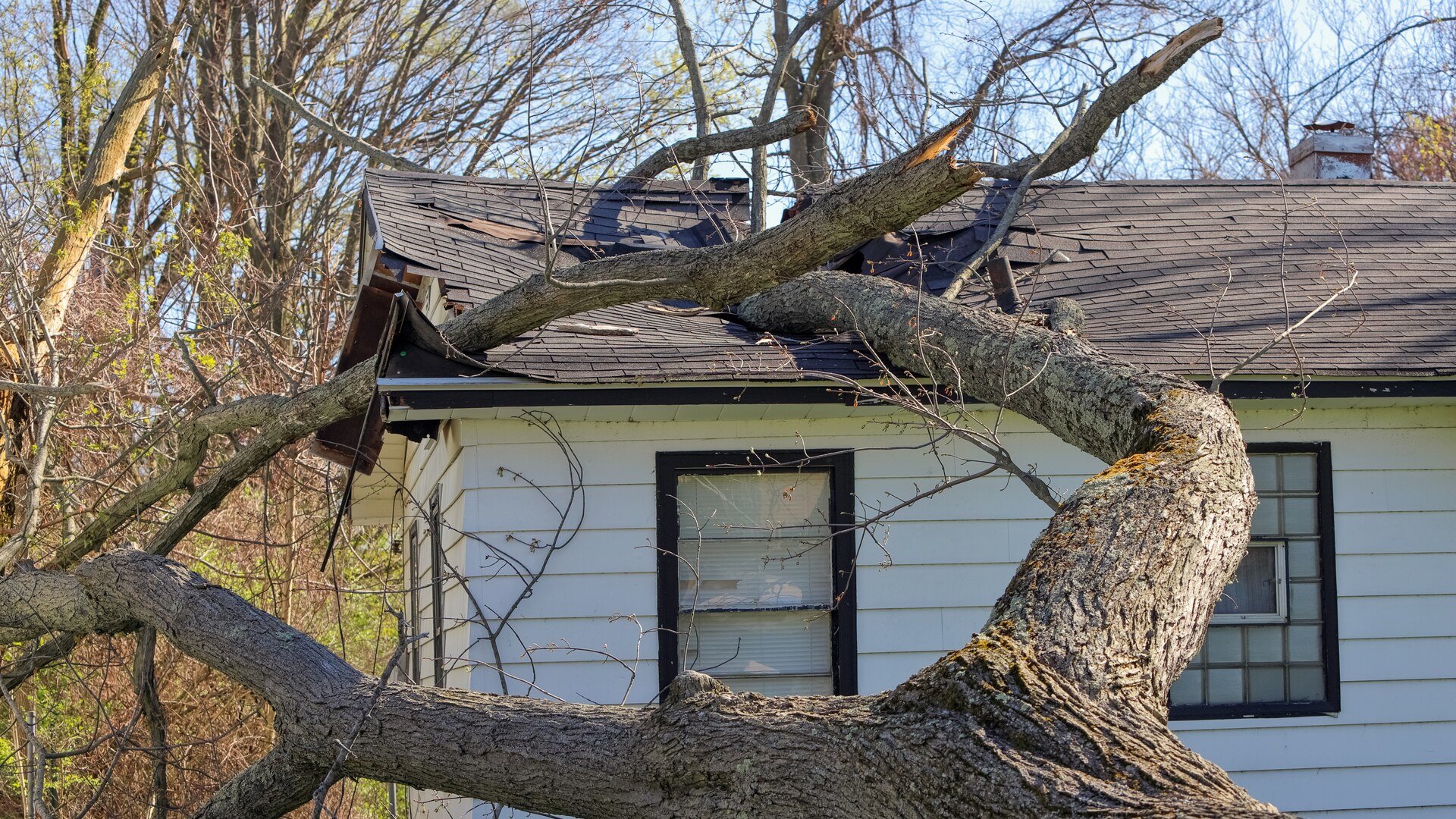
Tree on a structure, a vehicle, or across the only way in? We mobilize, make safe, and document before the first cut.
The hazard has to be neutralized. The property has to be protected from further damage — because water entering through a punctured roof at 2 a.m. becomes a much larger claim by morning. And the scene has to be documented, because once the tree is cut into rounds and chipped, nobody can prove what happened or how much it cost.
Green Care Earth is set up to do all three on the same call-out.
We answer 24 hours a day and mobilize within four hours. Tell us the loss address, what the tree is resting on, and whether anyone is inside — that determines the crew and equipment we roll with.
Before anything gets cut, we assess load paths and stored energy. A tree resting on a roof is holding tension; cutting it in the wrong order drops the rest of it through the ceiling. We isolate the hazard, establish an exclusion zone, and confirm whether utilities are involved. If there's line contact, the utility gets called before we touch anything — no exceptions, regardless of how urgent the situation feels.
Wide shots of the property, the failure point at the trunk or root plate, the damage path, and detail photos of every affected building component. Timestamped. This takes fifteen minutes and it is the difference between a scope that gets paid and a scope that gets argued.
Technical dismantle where the tree is on or over a structure — rigged down in controlled sections rather than dropped. Crane picks where the geometry demands it. Open fell only where it's genuinely safe.
Tarping over roof punctures, board-up of broken glazing, and fencing off unsafe areas so the property doesn't accumulate further damage overnight. Temporary protection →
Full debris removal, chipping, and site cleanup. We rake, blow and haul so the property is workable for the roofing and structural trades coming in behind us.

An inexperienced crew arrives, cuts everything into firewood, and leaves. Two weeks later someone asks whether the tree was decayed at the base and there's nothing left to look at. We photograph and, where causation is in question, preserve the failure section and root plate.
Getting a crane or bucket truck into a rear yard means going over a lawn, sometimes through a fence, occasionally across an interlock driveway. Those repairs are our crews and our scope.
Landscape restoration →Restoration contractors need a site that's ready to work in and a scope that doesn't overlap theirs. We're specific about where our line items stop and yours begin.
Within four hours for emergencies in our core service area, day or night. Storm events with widespread damage are triaged by severity — structures and life-safety first.
Not to make the site safe. Insurers expect reasonable steps to prevent further damage, and photographic documentation preserves the scene for the adjuster. We document thoroughly before we cut so nothing is lost.
Yes, as temporary protection to stop water ingress. That's a stabilization measure, not a repair — the roofing trade handles the permanent fix.
It depends on access, complexity, and whether a crane is required. We provide an itemized scope, not a lump sum, so every line is reviewable.
We'll get you a documented, itemized scope for the entire exterior — trees, hardscape and landscape on one file. Scoping and photo documentation are no charge.